
Sports
The 2026 CFL season is set to shake up the ledger sheets. With a new salary cap unveiled

The Canadian Football League has once again raised its salary cap, this time by 3.6 percent, pushing the 2026 limit to just under $6.3 million. This increase marks the second significant rise in consecutive years and continues a trend of steady growth for player compensation in the league. Since 2010, the CFL salary cap has climbed nearly 48 percent, and it has risen almost 20 percent since 2019, reflecting the league’s expanding revenues and efforts to remain competitive for talent.
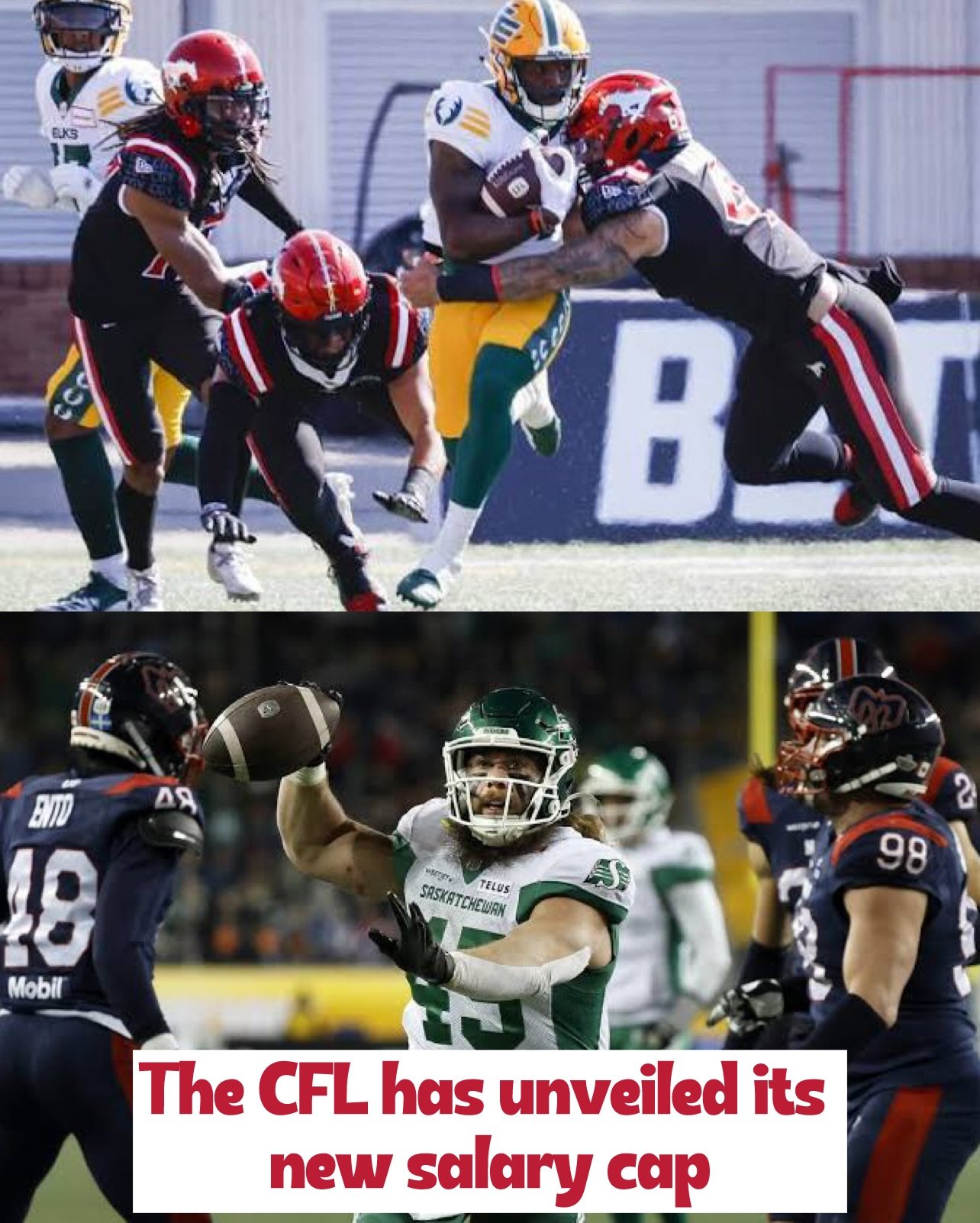
It’s important to note that CFL players are not overpaid; rather, the structure of contracts has evolved significantly over the past decade. When comparing salaries across eras, it’s best to consider them as a proportion of the league’s cap rather than just raw dollar amounts. For instance, a player earning $85,000 in 2010 represented roughly two percent of the salary cap at that time. Under the current cap, that same player would be making approximately $125,000. Similarly, contracts that were worth $125,000 in 2010 would now be equivalent to about $185,000, while a player earning $170,000 back then would be receiving roughly $250,000 today.
A modern example of this can be seen with Dejon Brissett, who signed with the Calgary Stampeders on a deal worth just under $210,000 in guaranteed money. While some fans might initially view this as a high figure for a receiver who has yet to reach a 1,000-yard season, putting it in historical context shows that Brissett’s contract aligns with what similar players would have earned under earlier caps. In 2010, his deal would have been roughly $140,000, in 2014 around $165,000, and by 2018 about $175,000. This perspective helps explain why some recent CFL free-agent deals have appeared “expensive” to fans or analysts, even though they are in line with the league’s long-term growth in player compensation.
Other contracts that raised eyebrows, such as offensive lineman Coulter Woodmansey with the Edmonton Elks at $300,000, running back Greg Bell with Ottawa at $175,000, and linebacker A.J. Allen at $240,000, also make sense when compared to historical deals. Rob Murphy, for example, won two Most Outstanding Offensive Lineman awards and earned $195,000 per season with the Toronto Argonauts in 2009. Josh Bourke, another top lineman, signed with Toronto for $230,000 in 2016. Similarly, receivers like Nick Moore in 2014 and Derel Walker in 2019 secured deals that were proportionally significant relative to the cap at the time.
Defensive stars have seen similar trends. Derek Dennis, after earning Most Outstanding Offensive Lineman accolades, signed with Saskatchewan for just over $180,000 in 2017. Micah Johnson joined the Roughriders from Calgary in 2019 for $250,000, while Ted Laurent extended with Hamilton in 2016 for $225,000. Delvin Breaux, returning from the NFL in 2018, signed an unprecedented contract for an American defensive back at nearly $200,000 with the Tiger-Cats. When adjusted for today’s salary cap, these deals would equate to roughly $220,000–$330,000, closely matching the figures handed to top free agents in 2026, including receivers like Kenny Lawler and Eugene Lewis.
While salaries in the CFL remain modest compared to other professional leagues, the trend demonstrates steady growth and sustainability. With a new television deal under negotiation for 2027, player compensation could accelerate even further, making some of the modern contracts appear high at first glance but quite reasonable in the context of the league’s evolving salary structure. Essentially, what might seem like record-breaking deals today are, in reality, consistent with the historical scaling of player salaries relative to the salary cap.
-

 Sports8 months ago
Quinn, Jack Hughes fire back at Toronto press post-Gold Medal win
-

 Other Teams11 months ago
CFL Expansion: 3 New Cities That Should Get a Team and reason why
-
 Blog9 months ago
New news on Marie-Philip Poulin creates uncertainty ahead of quarterfinal
-
 Other Teams9 months ago
Police comment on fatal accident that claimed the lives of three junior hockey players
-
 Other Teams11 months ago
Saskatchewan Roughriders quarterback Trevor Harris breaks silence and deliver his swift decision on his CFL future
-

 Sports8 months ago
These CFL stadiums are crying out for renovations, fans won’t like who lands at No.3.
-

 Blog2 years ago
ULTIMA ORA: Riesco ancora a mangiare 3 pasti al giorno anche senza la Juve. Il direttore sportivo della Juventus FC Cristiano Giuntoli ha lasciato la Juve senza parole annunciando ufficialmente la data del suo addio a causa…
-

 Sports9 months ago
Harsh wake-up call for driver involved in Humboldt Broncos tragedy