
Sports
How 2026 CFL final cuts could shape a perfect expansion-style team

With CFL teams completing their final training camp cuts on Saturday night, hundreds of players suddenly found themselves without contracts—several of them carrying strong resumes and legitimate pro experience. Once again, this exercise takes that pool of available talent and reshapes it into a full roster, essentially building a notional expansion team from the league’s discarded pieces.
Whether you call them the Atlantic Schooners, Quebec City Cast-Offs, or the Saskatoon Not-Good-Enoughs, the idea remains the same: a functioning CFL roster made entirely from players released at cutdown day.
The rules for constructing the team were straightforward. Only players cut at the final roster deadline were eligible. Pre-existing free agents such as McLeod Bethel-Thompson, mid-camp departures like Mario Alford, and anyone placed on a practice roster, retired list, or suspended list were excluded. All selected players were assumed to be healthy, and the roster had to meet CFL ratio requirements—meaning at least seven Canadian starters, a minimum of 20 Nationals overall, and at least one Global player. In general, more experienced players and proven draft picks were favoured over raw rookies.
Each player is labelled as American (A), Canadian (N), or Global (G), with starters marked by an asterisk.
At quarterback, the roster features Jarret Doege of the B.C. Lions, James Morgan of the Montreal Alouettes, and Arnaud Desjardins of Montreal. Doege is viewed as the most experienced option, having made multiple CFL starts across different teams, even if turnovers remain a concern. Morgan offers limited but valuable starting experience, while Desjardins brings a strong collegiate pedigree from Laval and developmental upside.
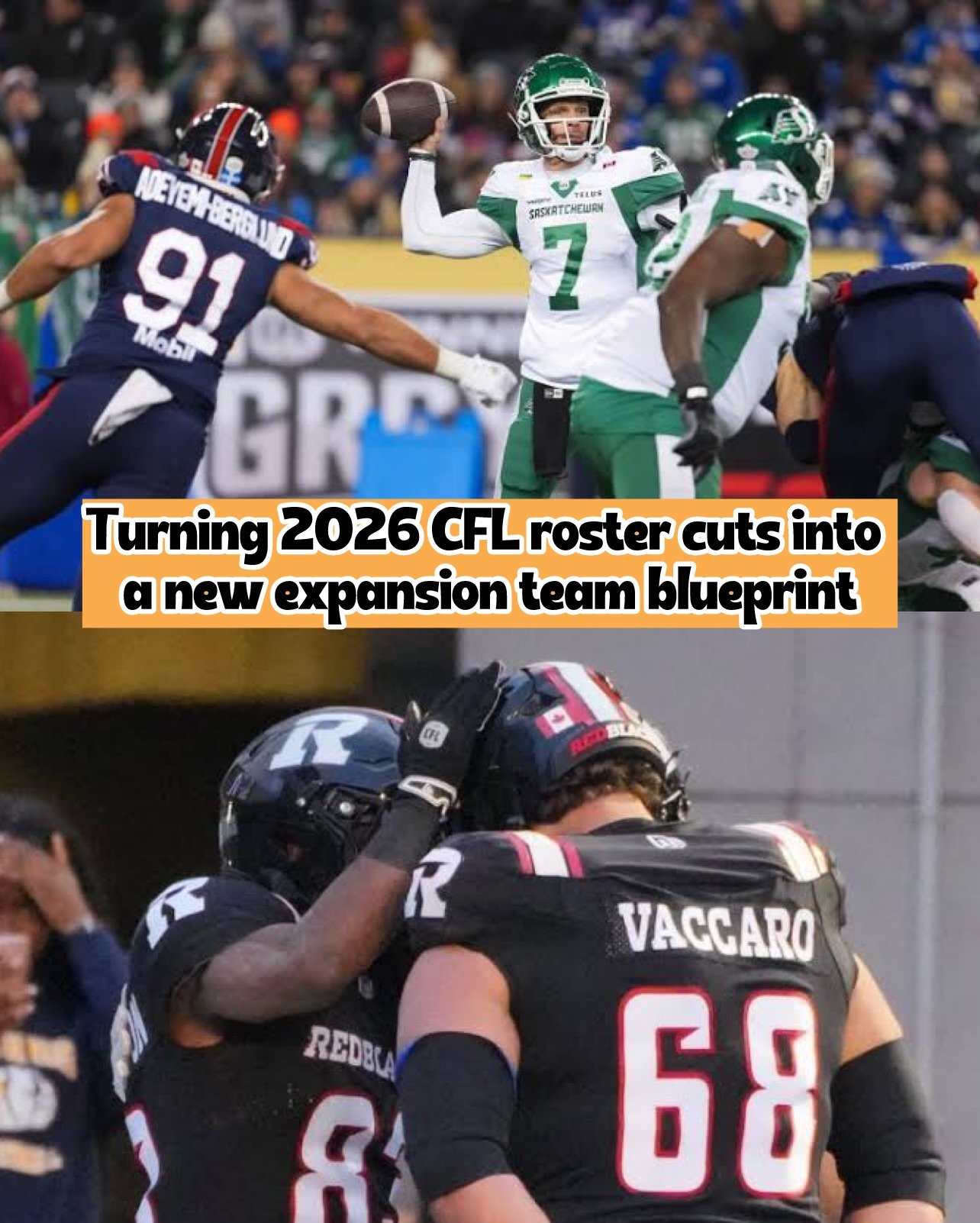
At running back, Mario Anderson Jr. of the Saskatchewan Roughriders and Peyton Logan of the Toronto Argonauts headline the group. Anderson profiles as the primary power back, capable of handling heavy workloads between the tackles, while Logan adds speed, versatility, and return ability. Together, they form a complementary backfield that balances strength and explosiveness.
On the defensive line, the unit is built around a mix of emerging talent and experienced contributors. Kene Onyeka and Ty Anderson of the Hamilton Tiger-Cats anchor the Canadian quota on the edge and interior, while Dylan Wynn provides veteran leadership and is effectively the cornerstone of the group. Chico Bennett Jr. and Greg Reaves bring rotational edge pressure, and depth pieces like Steven Kpehe, Ebenezer Dibula, and Kyler Laing round out the rotation with special teams value and developmental upside.
-

 Sports7 months ago
Quinn, Jack Hughes fire back at Toronto press post-Gold Medal win
-

 Other Teams10 months ago
CFL Expansion: 3 New Cities That Should Get a Team and reason why
-

 Blog7 months ago
New news on Marie-Philip Poulin creates uncertainty ahead of quarterfinal
-
 Other Teams7 months ago
Police comment on fatal accident that claimed the lives of three junior hockey players
-

 Other Teams10 months ago
Saskatchewan Roughriders quarterback Trevor Harris breaks silence and deliver his swift decision on his CFL future
-

 Sports6 months ago
These CFL stadiums are crying out for renovations, fans won’t like who lands at No.3.
-

 Blog1 year ago
ULTIMA ORA: Riesco ancora a mangiare 3 pasti al giorno anche senza la Juve. Il direttore sportivo della Juventus FC Cristiano Giuntoli ha lasciato la Juve senza parole annunciando ufficialmente la data del suo addio a causa…
-

 Sports7 months ago
Harsh wake-up call for driver involved in Humboldt Broncos tragedy